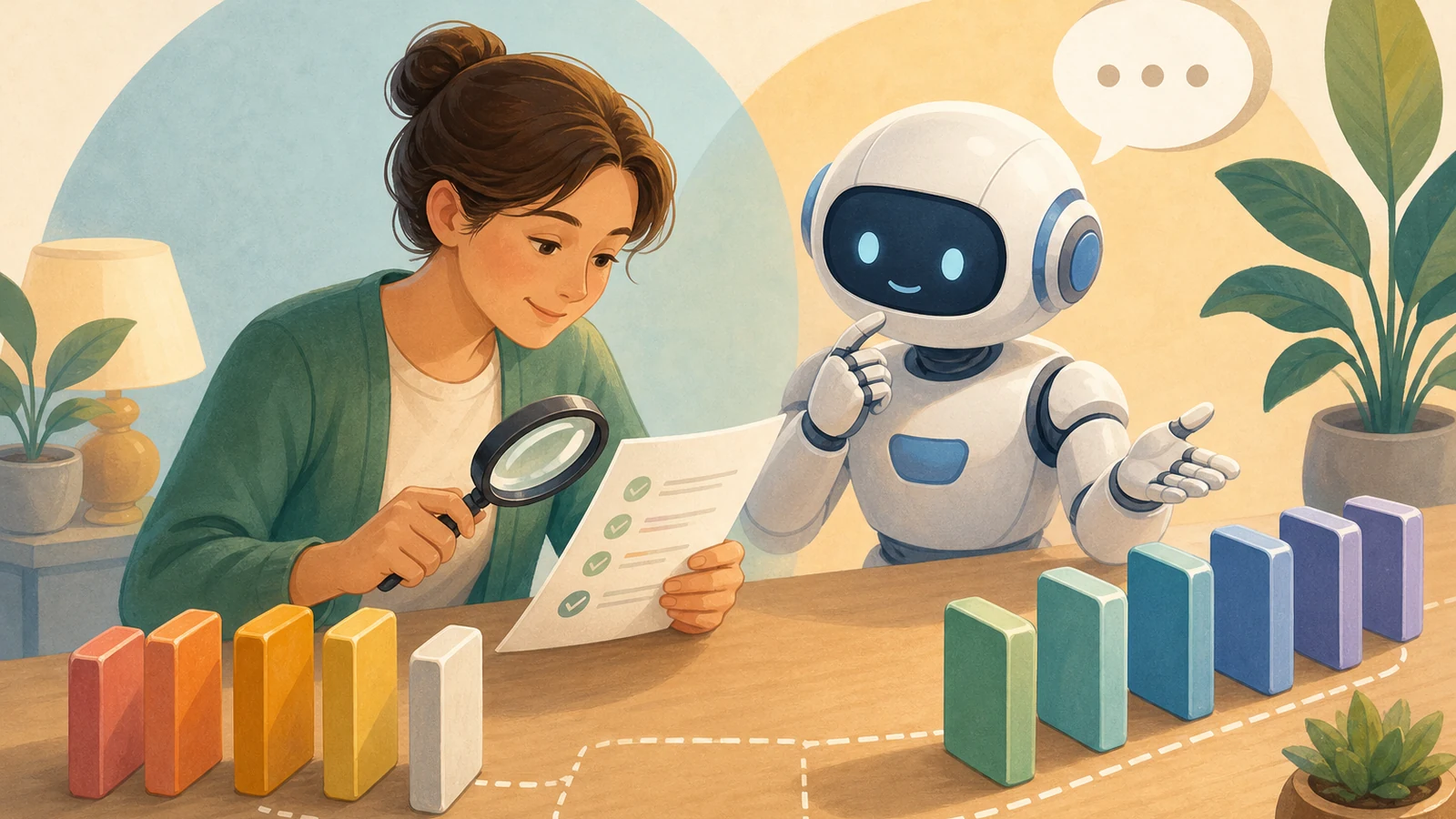

You may have seen this pattern before: the same AI tool summarized research clearly yesterday, but today it becomes cautious, misses the point, or seems to avoid certain parts of the task. You rewrite the prompt, restart the chat, try several phrasings, and the result still feels unstable.
It is easy to blame yourself: was the prompt bad? Sometimes it is. But on June 11, 2026, The Verge and Gizmodo reported that Anthropic apologized for an invisible guardrail in Claude Fable 5 and said the related protection would become visible. The useful lesson is simple: when an AI answer suddenly gets worse, the first question is not who made a mistake. It is whether this output can still be placed inside the workflow you were using.
If you are only asking AI for headline ideas, a dull answer may cost a few minutes. If it is helping with research summaries, client documents, code migration, or safety decisions, a change in hidden rules, routing, or guardrails means today’s output should not be compared directly with yesterday’s. First decide whether the model does not know, cannot answer, has been downgraded, or has quietly turned your task into something else.
This lesson turns “When AI Answers Suddenly Get Worse, First Decide Whether They Can Still Be Trusted” into one practical reader question: The invisible guardrail controversy around Claude Fable 5 is a reminder: when an AI answer suddenly gets worse, the real question is whether this output still belongs in your workflow. Use the rest of the article to document what should happen before the team proceeds.
The problem is not guardrails. It is invisible guardrails.
In its Claude Fable 5 / Mythos 5 announcement, Anthropic described Fable 5 as a capable model adapted for general use. Some high-risk topics may be answered by a lower-tier model or handled with extra safeguards. Anthropic also discussed “distillation attacks,” where someone collects large amounts of a strong model’s output and uses it to train another model. Distillation can be legitimate, but unauthorized large-scale extraction is something platforms try to prevent.
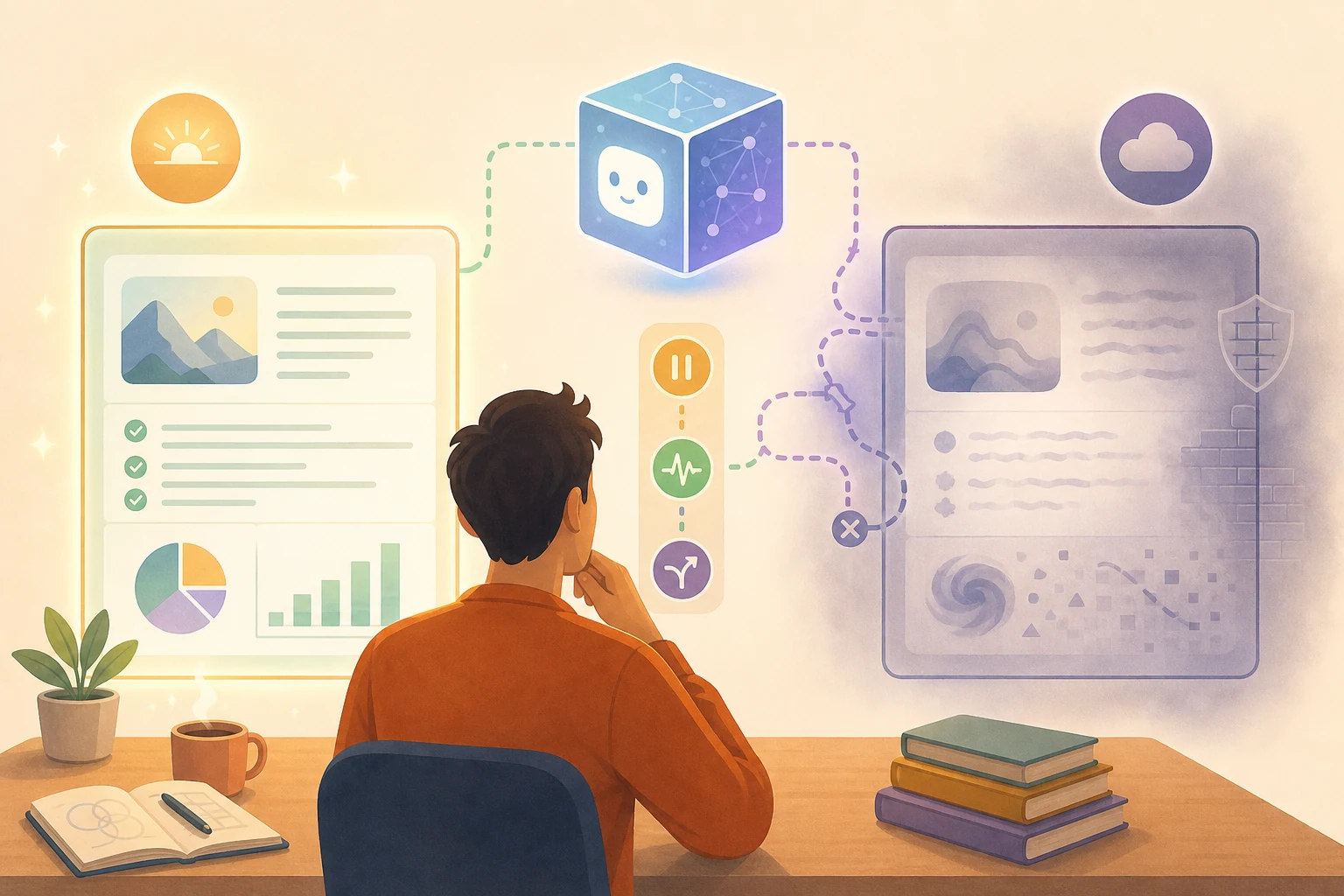
For most users, the practical effect is that certain tasks or domains may be routed into a more cautious mode without a clear notice. Guardrails are not surprising. The frustrating part is that when they are not visible, users only see a blurry result: shorter answers, vaguer answers, missing details, or a task that no longer behaves the way it did before.
For everyday teams, this is not just a benchmark debate. It is a workflow trust problem. Suppose your team tested a batch of customer-service replies with one model last week, and today you connect the same process to production drafting. If the model now handles some cases more cautiously but the interface does not say so, you may think you are repeating the same test even though the conditions have changed.
The most dangerous case is not a clear refusal. A refusal at least leaves a signal. The riskier case is an answer that looks usable while shrinking the task, skipping sensitive details, or using a weaker mode, making you think the quality drop is random.
First identify what kind of change you are seeing
When AI gets worse, do not immediately rewrite the prompt or switch models. Start by naming the change, because different changes imply different decisions.
Some changes are obvious: the model says it cannot answer or asks you to rephrase. That usually points to a safety policy, topic restriction, or product rule. You may dislike the limit, but at least you can see it.
Other changes are harder to catch: the answer becomes shorter, more generic, or less detailed than before, or the drop appears only in safety, code, medical, biology, data extraction, or competitive-research tasks. In those cases, the prompt may not be the only cause. Routing, server-side updates, experiments, or domain-specific guardrails may have changed.
The hardest case is quiet redirection. You ask for A, but the model gives a safer, vaguer B. You ask for an evaluation, but get a reminder. You ask for comparable results, but get advice that cannot be reproduced. If that output enters research conclusions, client commitments, or production code changes, a tool limitation becomes disguised as work product.
Use this table to sort the situation in front of you:
| What you see | Most likely cause | Next step |
|---|---|---|
| The model says it cannot answer, or asks you to rephrase | Safety policy or topic restriction | Check official guidance; do not force an answer for high-risk work |
| The answer is shorter, vaguer, or missing details | Downgraded model, routing change, or guardrail narrowing the task | Check status pages, product announcements, and repeat tests; pause formal use of this output |
| Only one task category suddenly gets worse | New domain guardrail, data limit, or experiment flag | Look for domain-specific official notes and credible tests; do not compare new results directly with old tests |
| The task seems quietly redirected | Invisible guardrail or system-level rewrite | Compare the original request with the output; do not treat it as a reliable test result |
The point is not to catch the platform doing something wrong. The point is to answer a practical question: can this output still carry the responsibility it was supposed to carry?
Let task risk decide the next step
Not every AI behavior change needs a major response. For brainstorming, tone edits, or personal notes, a model becoming more cautious may simply mean changing the prompt, changing the model, or trying again later.
But once a task affects formal judgment, your response should change. Research summaries influence decisions. Internal reports get repeated. Code drafts may be merged into production. Customer-service or contract language may be seen by customers. In those settings, opacity is not a small flaw. It is workflow risk.
A simple three-level rule helps:
| Task level | Examples | What to do when AI behavior changes |
|---|---|---|
| Low risk | Brainstorming, tone edits, personal notes | You can change the prompt or model; focus on efficiency |
| Medium risk | Research summaries, internal reports, code drafts | You may switch models, but keep sources, inputs, and output differences |
| High risk | Safety review, legal text, financial judgment, customer commitments, production code merge | Check the limitation, keep records, request human review; do not solve it only by switching models |
A safer approach is to return medium- and high-risk work to a verifiable state: keep the input, output, model name, time, limitation message, official explanation, and human judgment. If a supplier admits that a guardrail was previously invisible, affected workflows should be retested rather than relying on last week’s evaluation.
Human judgment here does not mean every small task needs executive approval. It means a responsible person can answer: can this output be delivered, are its limits visible, and can we identify which results are affected if model behavior changes again tomorrow?
Teams should make limitations visible
If you use AI in daily work, you do not need the model to reveal every internal mechanism. That is usually impossible. But your process can still leave visible signals.
For high-risk tasks, add a fixed request at the end: list any parts you could not answer, handled conservatively, or may have treated differently because of tool limitations. This will not guarantee perfect honesty, but it pushes hidden limits closer to the surface.
More importantly, do not treat “it worked yesterday” as a permanent fact. Models, rules, routing, guardrails, and vendor policies all change. When the same task suddenly produces a different quality of answer, check official status pages, release notes, model documentation, and credible media reports before deciding whether to rewrite prompts or switch models.
If the affected work is low risk, changing tools may be enough. If a high-risk workflow is affected, pause delivery, keep records, retest key cases, and only then decide whether to resume.
The more AI becomes part of work, the less it can be treated like an unchanging button. A reliable process does not require AI to be perfect forever. It requires humans to see when behavior changes, investigate why, and decide whether the next step can continue.
AI handoff card
Turn this trend follow-up decision into your own checklist Copy this into your own AI tool. It asks about your context first, then turns this article’s decision frame into an action checklist. BMC will not see what you paste.
I want to apply this BMC mini lesson to my own situation: When AI Answers Suddenly Get Worse, First Decide Whether They Can Still Be Trusted

Specific problem this article handles: The invisible guardrail controversy around Claude Fable 5 is a reminder: when an AI answer suddenly gets worse, the real question is whether this output still belongs in your workflow.
Article URL: https://boosterminiclass.com/en/posts/claude-fable-invisible-guardrail-checklist/

Do not only summarize the article. First ask me 3 questions to clarify:
1. the real workflow or decision I am dealing with;
2. which data, permissions, accounts, costs, or external actions are involved;
3. whether I need a stop/go decision, a trial checklist, a handoff template, or a risk tier.

Then check my situation with this article-specific framework: 1. Separate a worse AI answer into refusal, quality drop, task-specific degradation, or quiet task redirection; 2. Compare the symptom, likely cause, and next step before deciding whether the output can still carry its original responsibility; 3. Classify the task as low, medium, or high risk before changing prompts, switching models, or pausing the workflow; 4. For high-risk work, keep the input, output, limitation message, official explanation, and human judgment instead of treating opaque results as stable capability.

Please output:
- one sentence on whether I should proceed, run a limited trial, or pause;
- a comparison table applying the framework to my case, with ready / missing evidence / needs human review;
- one smallest step I can take today;
- where I need an owner, log, rollback path, or human review.
Before using the checklist, have a human verify evidence, owner, and rollback path.
References
- The Verge: Anthropic apologizes for invisible Claude Fable guardrails — https://www.theverge.com/ai-artificial-intelligence/948280/anthropic-claude-fable-invisible-distillation-guardrail
- Gizmodo: Anthropic Apologizes For One of the Guardrails on Its Fable 5 Model, and Will Change It — https://gizmodo.com/anthropic-apologizes-for-one-of-the-guardrails-on-its-fable-5-model-and-will-change-it-2000770365
- Anthropic: Claude Fable 5 and Claude Mythos 5 — https://www.anthropic.com/news/claude-fable-5-mythos-5
- Anthropic: Detecting and preventing distillation attacks — https://www.anthropic.com/news/detecting-and-preventing-distillation-attacks