
In May 2026, the New York startup Shift began offering free in-home cleaning, on the condition that cleaners wear head-mounted cameras and record the whole job from a first-person view to train household robots. Both Ars Technica and The Verge covered the business: real homes are far messier than showrooms, and robotics companies will pay for that data.
Shift’s FAQ is direct: footage is anonymized and processed, then licensed to AI and robotics companies for training; processing involves sharing it with annotators; it is never shared publicly or used for advertising; names, faces, and personal information on screens, ID cards, and paper are automatically blurred.
These promises answer part of the question but leave two key blanks: which companies the footage will be licensed to, and whether you can ask for it to be deleted. The page doesn’t explain any way to delete. Before agreeing, get clear answers on both.
Blurring hides faces, not floor plans
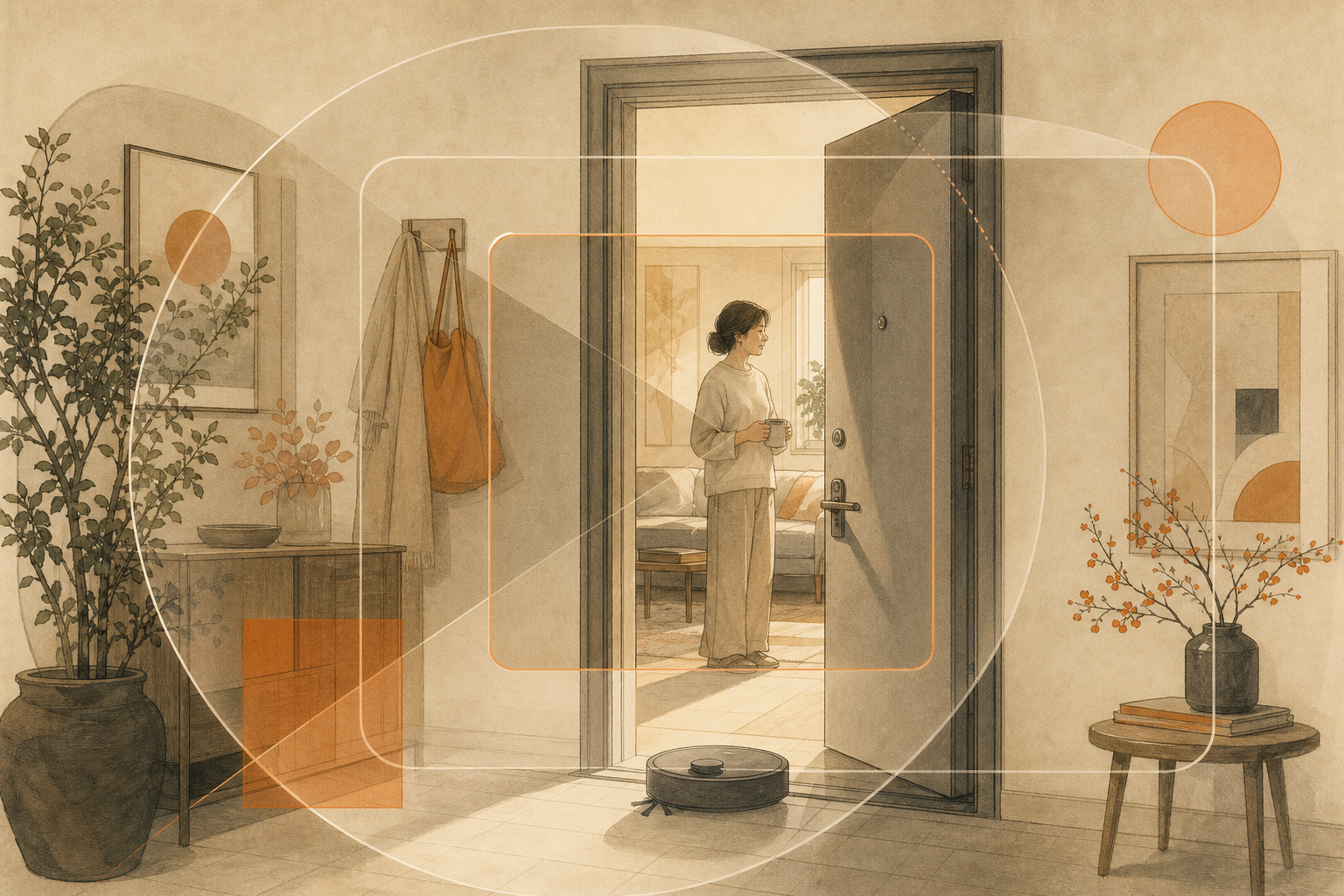
Blurring hides faces, documents, and screens, but not the space itself. A cleaning video records the layout of your living room and kitchen, how you store things, your children’s toys, your pets’ movements, and how each corner of the home is used. That’s exactly what robot training needs, and exactly what blurring leaves untouched.
The bigger issue is licensing. Once footage is licensed to other companies, it leaves the control of the company that cleaned your home. Asking Shift to delete it doesn’t mean models already trained on it, or copies held by other companies, will disappear too.
Ask four questions before agreeing
What will be recorded? Which rooms, during which hours, and whether audio is captured. You can ask to open only the living room and kitchen, keep bedrooms, bathrooms, and studies off-camera, and put away personal documents, photo walls, and medical supplies first.
Who will it go to? Beyond annotators, which companies the footage will be licensed to, for what use, and whether it’s stored across borders. “Used for AI training” isn’t specific enough.
Can it be deleted? How long until raw footage, annotations, and backups are each cleared, and what happens to data already licensed out and models already trained if you withdraw consent. Often, withdrawing only stops future collection.
Do others in the home know? Family members, roommates, and anyone who might visit that day will appear in footage of your home. They should know and agree too, and children call for particular care.
If the answers are unclear, choose no recording
If you just want a clean home, paid cleaning or a no-recording option is usually much simpler. The real cost of the free option is managing the risk of household footage once it leaves your home, a cost that never shows up on a bill.
Consider accepting only if all four questions have clear written answers and the people you live with agree, and start with low-risk areas. When others in your home will be recorded too, the principle of agreeing in advance is the same as when an AI note-taker joins a meeting; see An AI Note-Taker Joins the Meeting: Settle Four Things Before It Starts.
Policies change, and privacy law varies by place
This article is based on Shift’s public information at the time of reporting, and policies can change; before signing, rely on the written terms the company provides. Privacy laws differ by place, and so do the deletion rights you can assert.
Household robots need real data; that’s understandable. But real data should be obtained with clear consent. The same questions apply to always-on AI devices in the home: what they can see and do should be settled first; see An Always-On AI Assistant Should Learn to Stop Before It Joins Your Main Accounts.
AI handoff card
A company is offering a free (or discounted) service on the condition that it records footage of my home to train AI or robots. I want to ask the right questions before agreeing.
The method comes from this article: https://boosterminiclass.com/en/posts/home-robot-training-data-consent-checklist/
Its view: blurring hides faces and documents but not the home's layout and daily routines; once footage is licensed to other companies, it may not be deletable. Before agreeing, ask what will be recorded, who it will go to, whether it can be deleted, and whether the people you live with agree.

First ask me: the company's name and offer, my living situation (housemates, children, pets), and what terms or explanations the company has provided so far.
Then:
1. Under four headings, "what will be recorded," "who it will go to," "can it be deleted," and "do housemates agree," list questions I should get written answers to from the company;
2. Based on the terms I provide, mark which are answered and which remain blank or vague;
3. Suggest a minimal recording scope: which rooms are fine, which to exclude, and what to put away first;
4. Give a judgment: accept, accept only a low-risk scope, or choose the no-recording option, with reasons.
Don't judge the legal effect of the terms for me; only point out where questions need answering.
References
- Shift official FAQ: Free Home Cleaning in NYC — https://www.shiftapp.nyc/ [accessed: 2026-10-11]
- Ars Technica: Startup offers free home cleaning—if it can record it all for robot training — https://arstechnica.com/ai/2026/05/robot-training-startup-will-send-humans-wearing-cameras-to-clean-your-home/ (2026-05-29)
- The Verge: Tech companies desperately want to film you doing chores — https://www.theverge.com/ai-artificial-intelligence/940007/ai-companies-will-pay-for-robot-training-data (2026-05-29)